A failed compressor rarely stays a compressor problem for long. Once a cool room refrigeration unit is up for replacement, the job has a habit of getting bigger.
Plenty of cool room faults are still repairable, and a sound older system can run for years with good maintenance. When replacement does become the answer, the scope often reaches well past the outdoor unit.
That’s because cool room refrigeration works as one matched system. Swapping a single part changes the conditions every other part was designed around.
What a Cool Room Refrigeration System Actually Includes
A cool room refrigeration system is a matched set of parts: an outdoor condensing unit, indoor evaporator, expansion device, pipework and controls. Each one is sized around the others, so none of them works as a standalone “unit”.
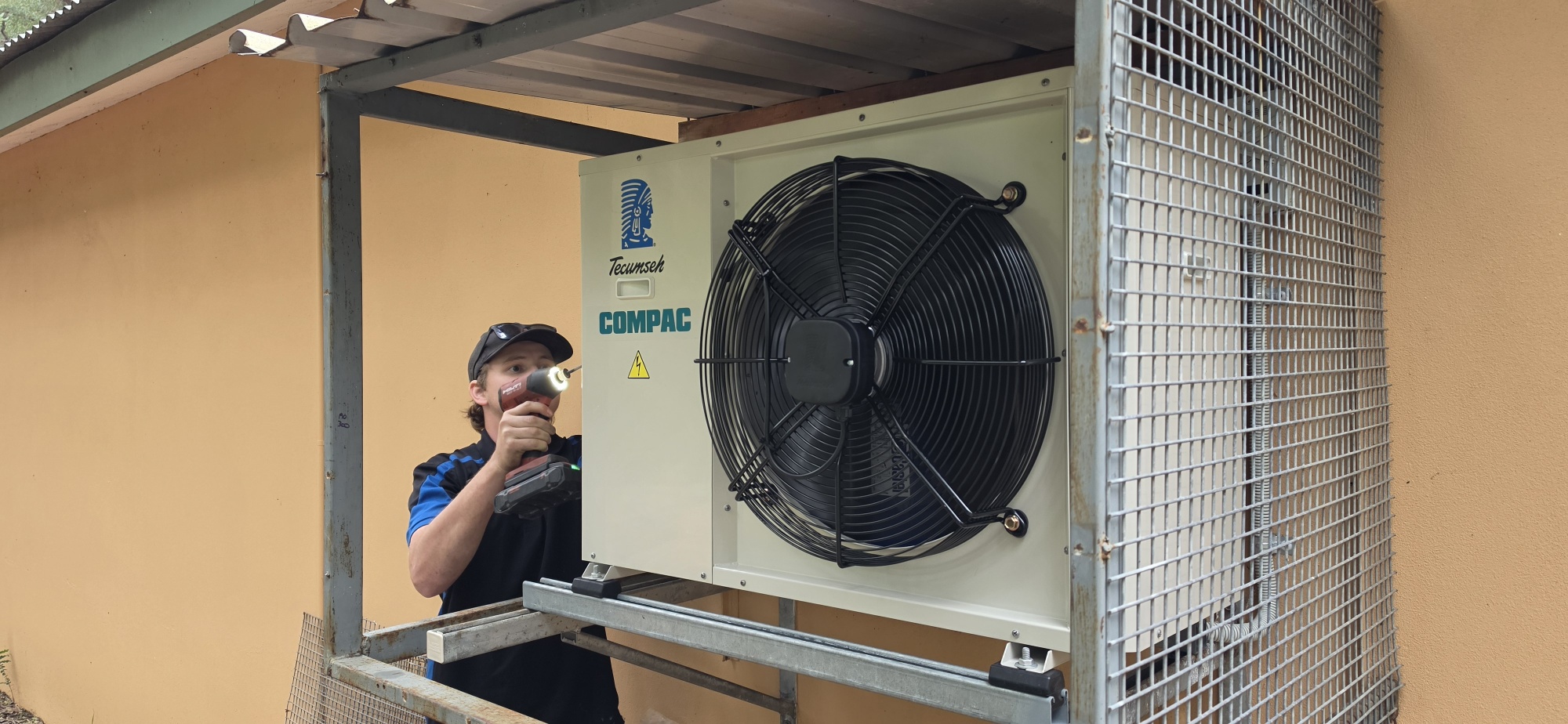
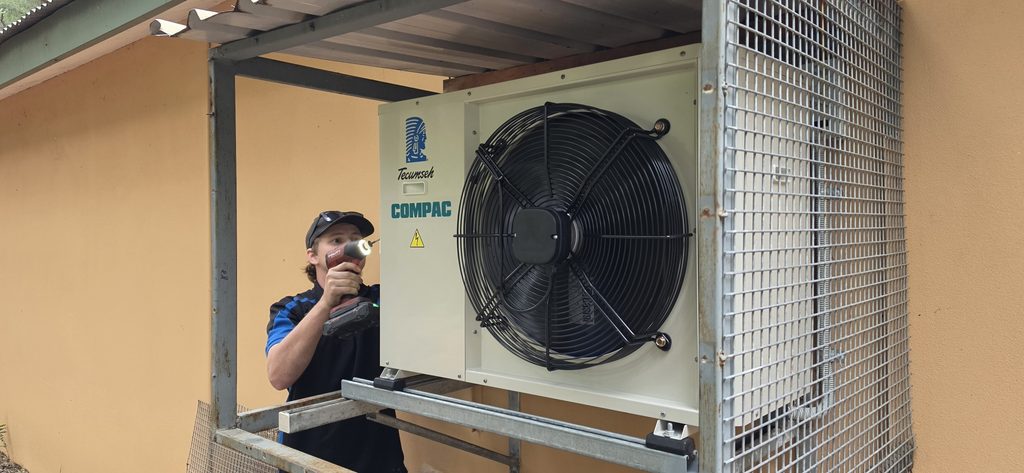
- The condensing unit sits outside and houses the compressor, condenser coil and fans. Its job is rejecting the heat pulled out of the room.
- The evaporator sits inside the room, where refrigerant boils off in its coil and absorbs heat from the air.
- The expansion device meters refrigerant into the evaporator. It’s either a thermostatic expansion valve (TXV) or an electronic expansion valve (EEV).
- Copper pipework links the two halves, along with insulation, filter driers and sight glasses.
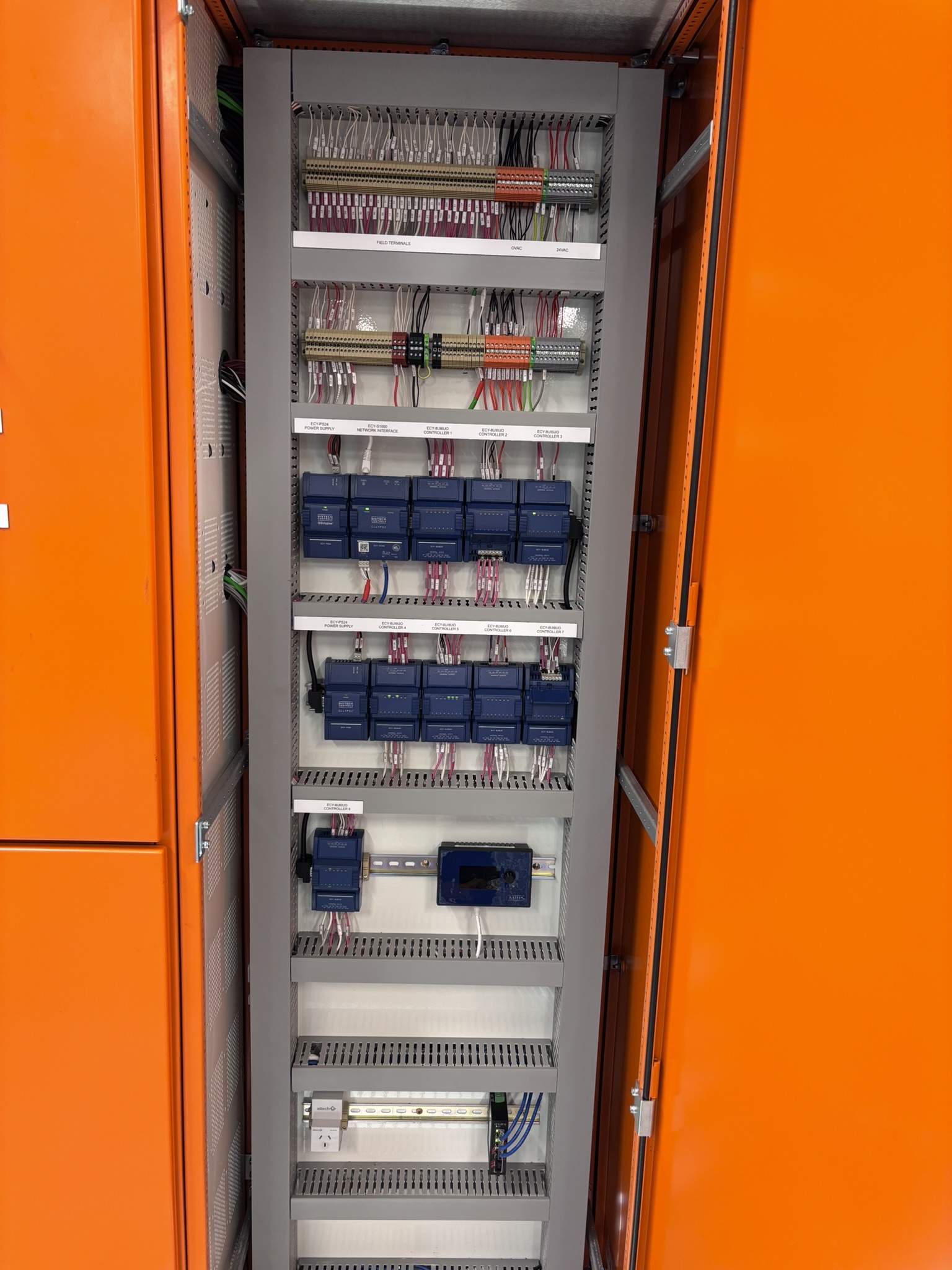
- The controller and its sensors manage temperature, defrost and fan operation.
Temperature difference, or TD, is the gap between the evaporator coil’s temperature and the room air. It’s one of the main figures an evaporator is selected on, and it matters a great deal once parts start changing.
Why a New Condensing Unit Rarely Suits an Old Evaporator
A new condensing unit paired with an old evaporator often ends up mismatched on capacity. The usual result is unstable temperatures, heavy icing or a compressor working harder than it should.
- Short cycling, where an oversized compressor starts and stops far too often
- Heavy frost on the evaporator coil, which drives longer and more frequent defrosts
- Product drying out, because a coil running at too wide a TD strips moisture from the air
- The room drifting above 5°C during busy periods with plenty of door openings
Capacity ratings also depend on the conditions they’re quoted at. Two condensing units with similar nameplates can perform quite differently on the same old coil.
That 5°C figure matters for food businesses. The Food Standards Code generally requires potentially hazardous food to be held at 5°C or below when kept cold. A room that creeps above that line on a hot afternoon puts stock and compliance at risk.
The Refrigerant Change Drags Everything Else Along
The refrigerant changeover is often what turns a simple swap into a full replacement. Many older Australian cool rooms run on R404A, and new plant is generally built for lower global warming potential (GWP) gases such as R448A.
- R448A’s temperature glide sits around 4 to 6 K depending on conditions, which changes how superheat is measured and set
- A TXV sized for R404A may need adjusting, and often needs replacing with a valve suited to the new gas
- Controller settings, pressure switches and safety cut-outs all need re-checking against R448A’s pressure-temperature behaviour
- Any R404A left in old coils and lines has to be recovered properly before the changeover
Glide is the temperature change some refrigerant blends go through as they boil at constant pressure. R404A’s glide is negligible, which is why superheat settings carried over from the old gas can be wrong for R448A.
R404A’s GWP sits near 3,900, and R448A’s is roughly a third of that. Australia’s HFC phase-down is cutting bulk HFC imports by 85 per cent by 2036, measured in CO2-equivalent terms. As quotas shrink, high-GWP gases get harder to justify in new work.
There’s a sting in the tail with capacity, too. Under some medium-temperature conditions, R448A can deliver around 8 per cent less cooling than R404A through the same compressor. Discharge temperatures can also run noticeably hotter, which adds heat stress to an ageing compressor.
Once the valve, settings and pressure controls are all being reworked, keeping an old evaporator starts to look like false economy. Many refrigeration techs prefer to start the new gas in a clean, matched circuit.
Frequently Asked Questions
Can Just the Condensing Unit on a Cool Room Be Replaced?
Replacing only the condensing unit is possible when the evaporator, valve and pipework are sound and suit the new unit’s capacity and refrigerant. Confirming that takes testing and a check against the new unit’s specifications. On older R404A systems, those conditions often aren’t met.
Does Moving from R404A to R448A Mean a New Evaporator?
Moving to R448A usually means reworking the expansion valve, settings and pressure controls, and the evaporator often follows. Once that work is underway, an ageing coil gets harder to justify keeping. Corrosion and capacity mismatch are the usual deciding factors.
How Does a Compressor Burnout Affect Replacement Scope?
A compressor burnout usually widens the replacement scope, because acid and moisture from the failure can remain in the pipework and evaporator. Left in place, that contamination can attack a new compressor’s windings. Burnout systems normally need flushing or re-piping, along with new filter driers, before new plant is commissioned.
Key Takeaways
A cool room unit replacement often becomes comprehensive because changing one part of a matched system exposes the age and fit of the rest.
The refrigerant changeover is the biggest driver, since R448A brings different glide and capacity to a circuit built for R404A. Old pipework and outdated controls add further reasons to start fresh.
An on-site assessment decides the final scope. When it points to full replacement, that’s often the more predictable spend over the system’s life.