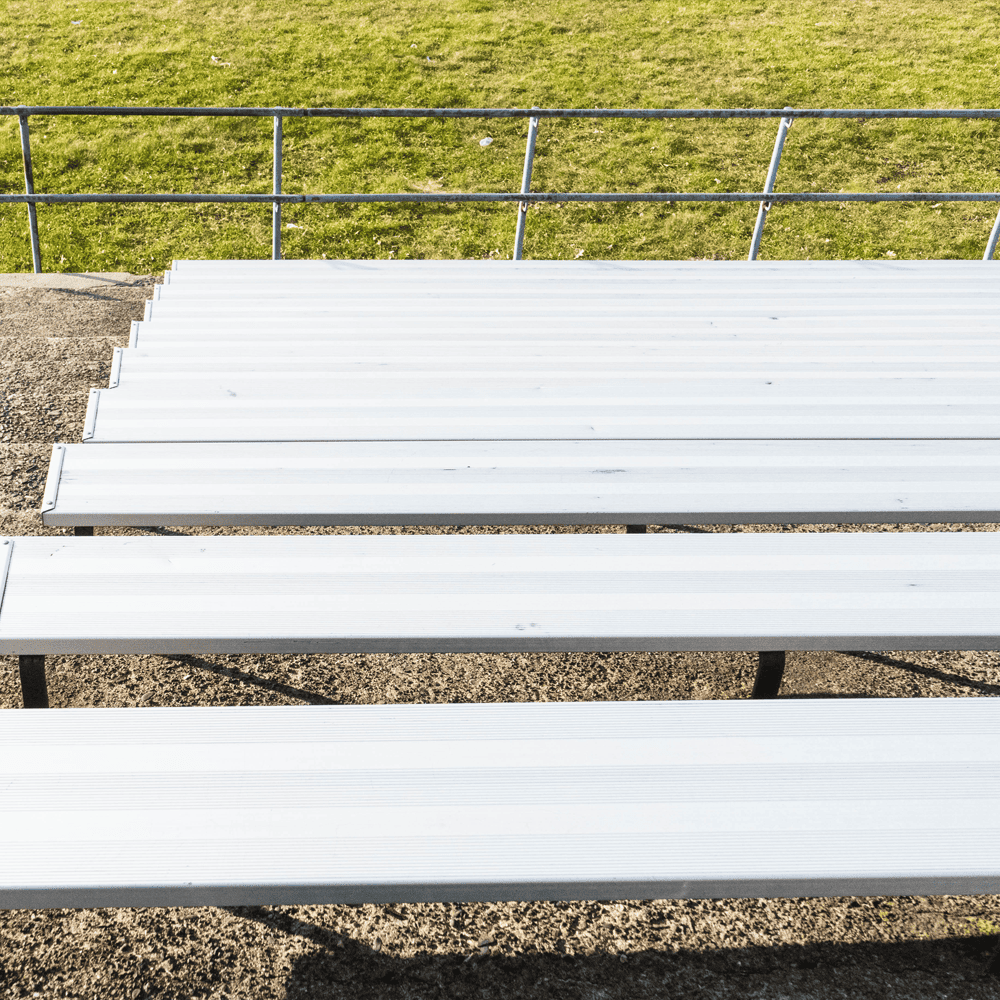
Anodising turns the outer skin of an aluminium outdoor bench seat into a hard layer of aluminium oxide grown from the metal itself. Nothing’s painted on, so there’s nothing to peel.
That sounds simple enough. What actually decides performance is how the coating was sealed and what happened in the workshop before the seat went near a tank. Two benches can both be sold as “anodised” and age completely differently on the same school oval.
An anodised outdoor bench seat usually gets one line on a quote. Most of what decides its lifespan sits underneath that line.
What Anodising Means in Plain Terms
Anodising is an electrochemical process that thickens aluminium’s natural oxide layer into a controlled, durable coating that’s part of the metal. Bare aluminium already grows its own oxide film the moment it meets air. That film is only a few nanometres thick, though, which is why untreated aluminium goes dull and chalky outdoors.
An AA20 anodised coating is around 20 microns thick. That’s thousands of times thicker than the natural film, and its thickness is controlled in the tank.
The seat surface ends up as a ceramic skin over a metal core.
How the Oxide Layer Actually Forms
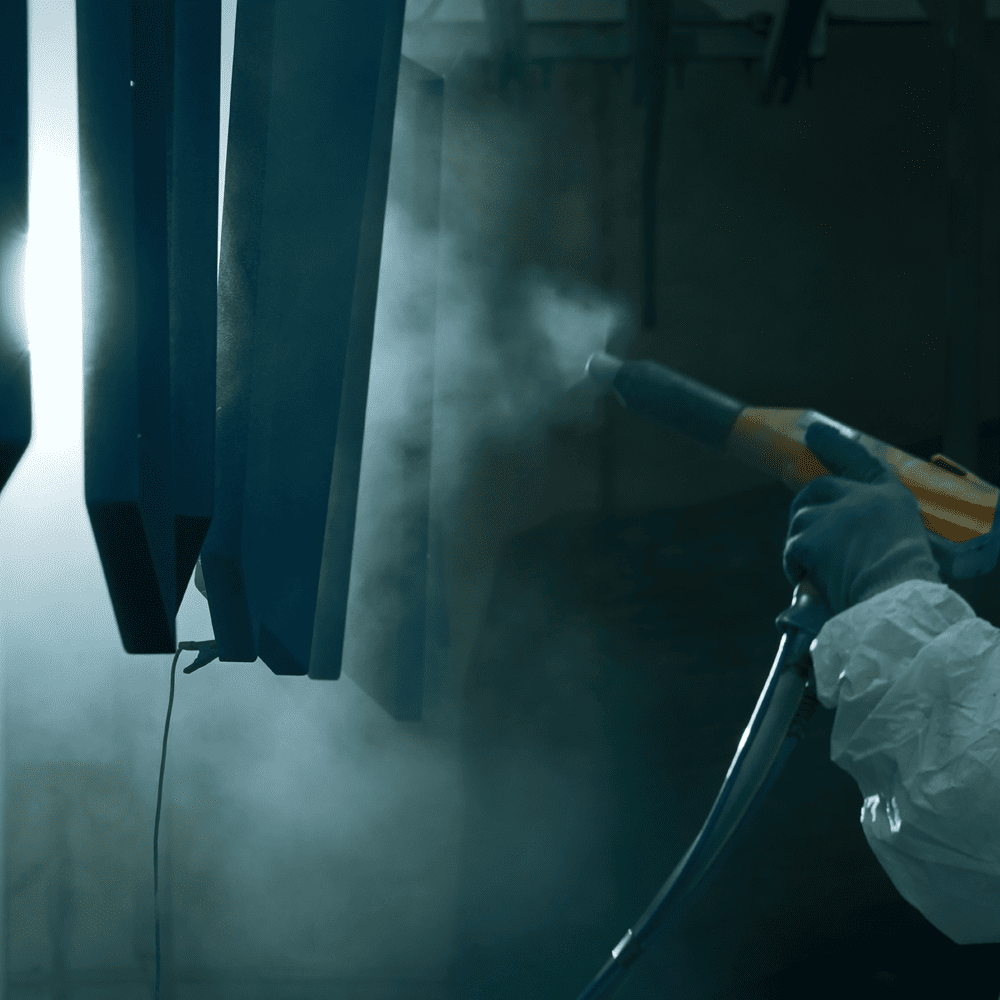
The oxide forms when the bench parts are made the positive electrode (the anode) in an acid bath and current is pushed through them. Most architectural work uses a sulphuric acid electrolyte, and the process runs in a set order.
- Cleaning and degreasing to strip extrusion oils and handling grime.
- Etching, usually in a caustic solution, which sets the matte or satin look and softens minor surface marks.
- Desmutting in an acid dip to clear the residue that etching leaves behind.
- Anodising in the sulphuric acid tank, where oxygen released at the surface combines with the aluminium.
- Optional dyeing, done while the pores are still open.
- Sealing, which closes the pores and locks the finish in.
A large share of the coating grows inward by consuming base metal. That’s why anodising barely changes dimensions and why there’s no edge for anything to lift from.
Under magnification, the fresh layer looks like a honeycomb of tiny hexagonal cells. Each one has a pore running down the middle, and those pores explain why the next step matters so much.
Why Sealing Decides How Long the Finish Lasts
Sealing decides most of an anodised bench’s outdoor life, because an unsealed coating stays porous and soaks up salt and grime. Anodisers check seal quality with simple tests that buyers rarely hear about.
- A dye spot test, where a drop of dye is applied and wiped off a test area. Any lingering stain points to open pores.
- An acid dissolution test, which measures how much coating mass a poor seal loses in a set acid.
- Admittance testing, a quick electrical check that suits high-volume production runs.
Sealing usually involves near-boiling deionised water or a nickel acetate bath. Either way, the oxide hydrates and swells until the pores close off.
A poorly sealed seat looks fine on delivery day. Near the coast, it can start staining and pitting well before a properly sealed coating shows any wear. There’s no fixing that on site.
What AS 1231 Thickness Classes Mean for Bench Seats
AS 1231 grades anodic coatings by thickness, and the number in each class is the minimum thickness in microns. For outdoor seating, the class matters far more than the colour.
- AA10 and AA15 are lighter grades, generally kept to sheltered positions.
- AA20 is the usual spec for exterior street furniture and open playgrounds.
- AA20 or thicker suits pool concourses, where chlorine splash and constant moisture never let up.
- AA25 is the usual recommendation near the coast, where salt spray regularly reaches the seats.
The catch is that suppliers often just write “anodised”. They don’t always publish their class, and it’s often only confirmed on request.
Coating thickness is easy to check. An eddy current gauge gives a reading in seconds without marking the seat, so there’s no point arguing about it after delivery.
Frequently Asked Questions
Does Anodising Make Aluminium Benches Stronger?
No. Anodising has no meaningful effect on the load capacity of the frame or slats. Load ratings depend on the alloy and section design, and the coating only changes how the surface behaves.
Can Scratches on an Anodised Bench Seat Be Repaired?
Scratches that cut through the oxide can’t be touched up on site, since paint won’t recreate the anodic layer. Marks that sit on the surface, such as rubber or metal transfer, often clean off with a neutral cleaner and a soft cloth. Full repair means removing the part, stripping it and re-anodising it in a workshop.
Why Do Anodised Bench Legs Go Dull at the Base?
A dull ring at the footing line usually means wet concrete or mortar touched the legs during installation. The alkaline slurry etches the oxide quickly, and the damage is permanent. Masking the legs before the pour prevents it.
Final Thoughts
Anodising converts the surface of an aluminium bench into a hard, sealed oxide that won’t peel. Sealing quality and coating class carry most of the weight in how long that surface lasts.
How good it looks on day one is settled in the workshop, mostly by fabrication order and weld filler.
After that, it mostly comes down to keeping concrete and caustic cleaners away from the legs. The oxide doesn’t ask much else of anyone.