T-slot aluminium extrusion is used to build frames that bolt together without welding and can be reconfigured later. Machine frames, guarding, workstations, automation systems, jigs and enclosures all sit within its usual range of work.
Because every joint is bolted, a T-slot aluminium extrusion frame can be unbolted, altered and put back into service without scrapping the original material.
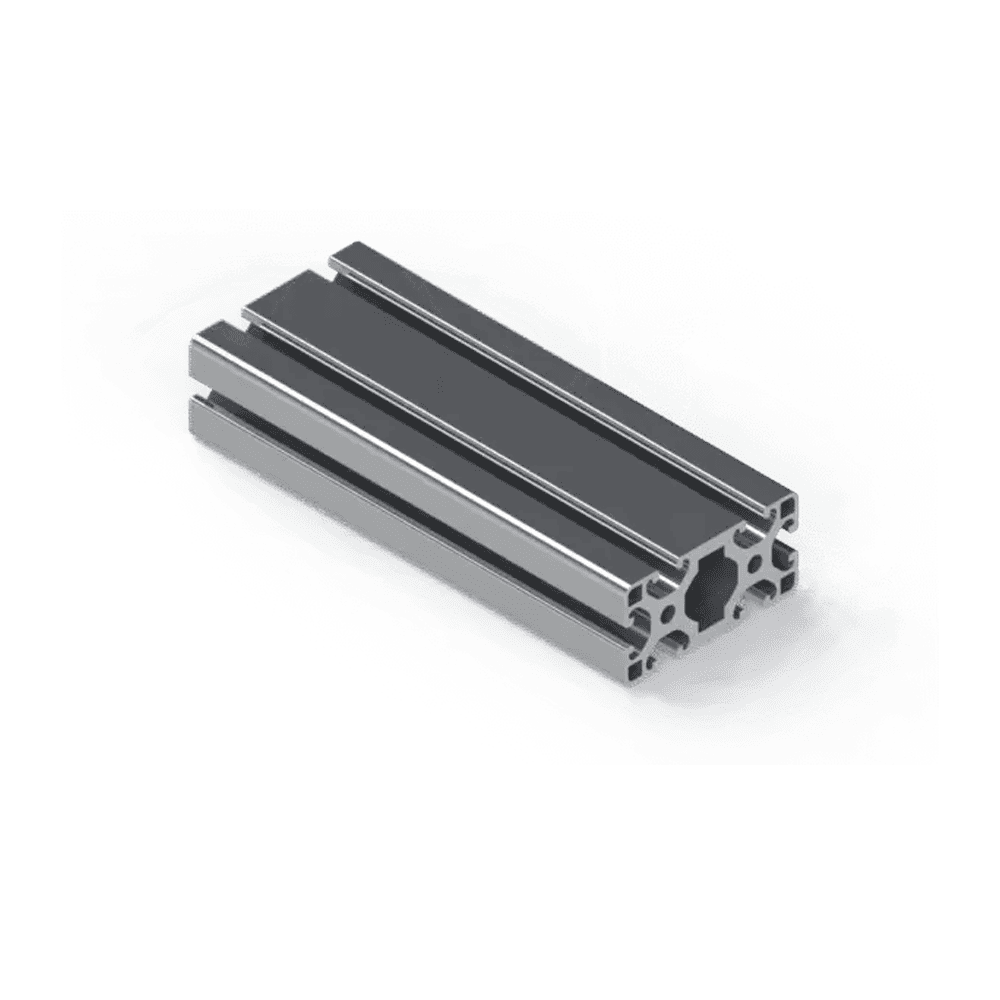
A T-slot aluminium extrusion is a length of aluminium alloy pushed through a shaped die, leaving T-shaped channels along each face. Those channels take T-nuts, so brackets, panels and fittings bolt on anywhere along the length without drilling. Most profiles use a 6000-series alloy, typically 6063 in a T5 or T6 temper.
The Main Uses of T-Slot Aluminium Extrusion
T-slot aluminium extrusion is mainly used for machine frames, guarding, workstations, automation systems, jigs and enclosures. The 25×25, 40×40, 50×50 and 80x40mm profiles cover these builds between them.
- machine frames and bases carrying motors or gearboxes
- fixed guarding around robots, presses and conveyors
- assembly benches, packing stations and workstations
- automation cells, conveyor stands and gantry beams
- jigs, test fixtures and inspection stands
- 3D printer enclosures and small equipment covers
- mobile carts on castors
- display and signage frames
A packing bench built around one carton size shows how this plays out. When the product changes, the shelf and scanner mount move to new positions along the uprights. The frame itself stays put.
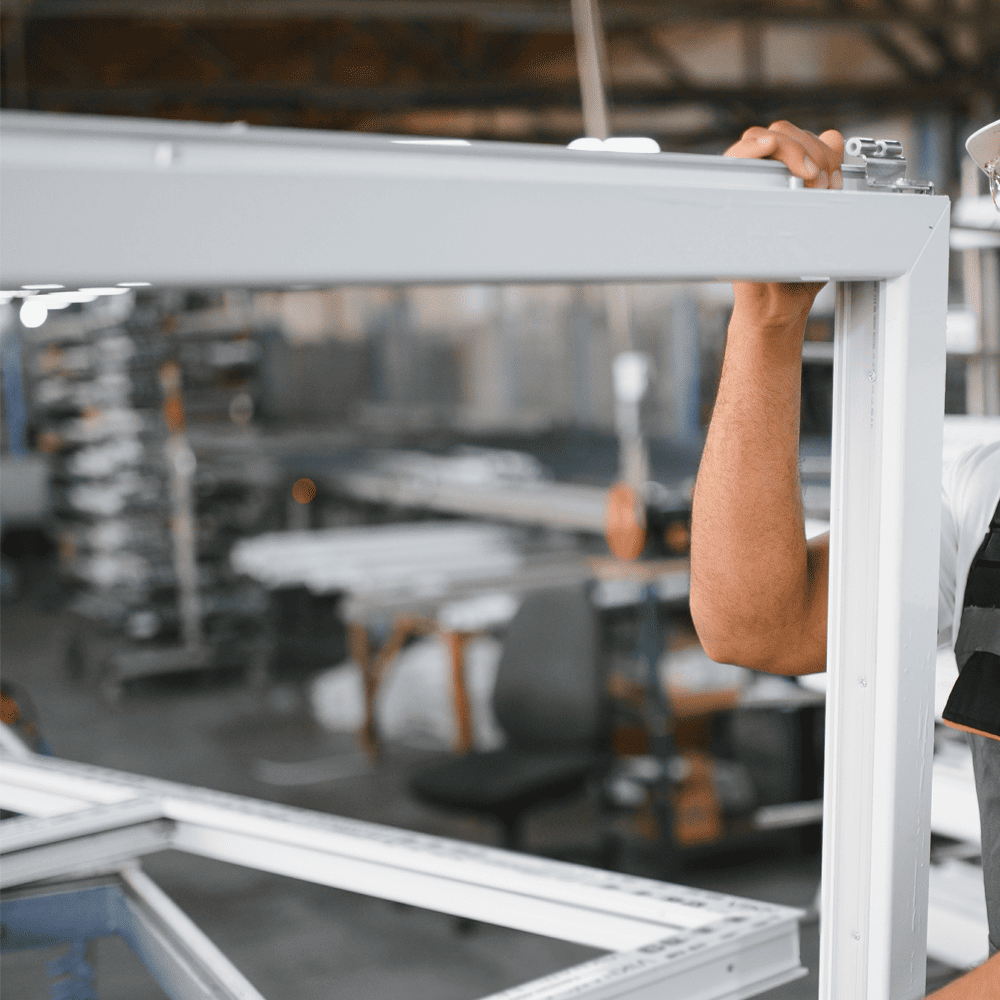
Machine Guarding and Safety Enclosures
Machine guarding is a common T-slot application because mesh and polycarbonate infill panels sit directly in the slots. Guards on Australian machinery fall under WHS regulations, and the AS/NZS 4024 series is the main Australian standard for machinery safety.
The standard itself is voluntary unless legislation or a contract calls it up. In practice, it’s the benchmark most guard designs are measured against when showing the risk has been properly controlled.
Fixed guard panels generally need fixings that only come off with a tool. Quick-release clips can speed up the frame build, though they’re generally unsuitable for fixed guard infill.
Mesh openings are checked against safe reaching distances, and larger apertures require the guard to sit further from the hazard. Settling the mesh and the floor layout together avoids a guard that won’t fit the space around a cell.
Hinged access doors are typically fitted with interlock switches wired into the machine’s safety circuit. The switch brackets bolt to the T-slot frame like any other fitting.
Responsibility for the guard sits with the WHS duty holders. That includes the machine’s designer, manufacturer and supplier, plus the business operating it.
Workstations and Assembly Benches
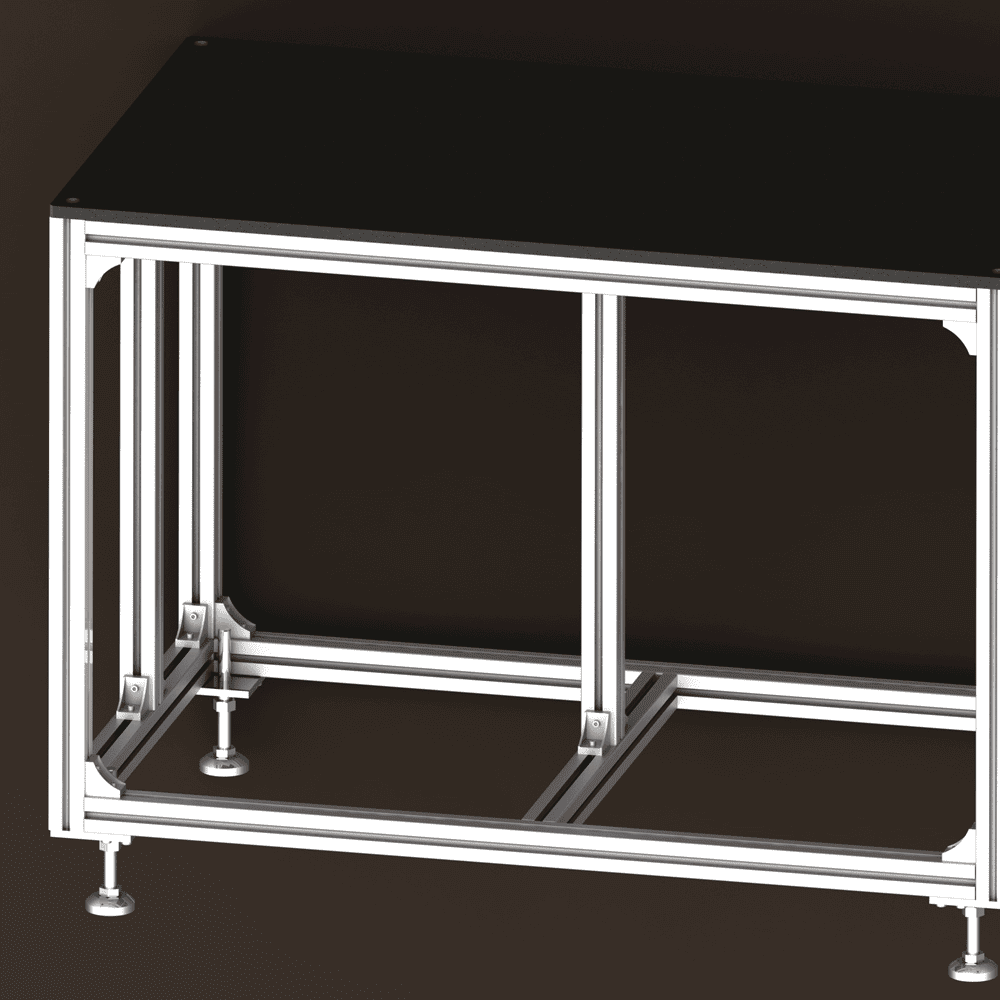
T-slot workstations are used on assembly and packing lines because shelves, fixtures and parts storage can be repositioned without rebuilding the bench. A frame built for one product run can be reset for the next without new framing.
- assembly benches and packing stations
- inspection and test benches carrying instruments
- benches fitted with vices, small presses or test gear
- shelving and parts storage built into the bench frame
Heavier fixed equipment changes the profile choice. A vice or small press bolted to the top generally calls for 50×50 legs or an 80×40 top rail, while lighter assembly work sits comfortably on 40×40.
Automation, Gantries and Linear Motion
In automation, T-slot extrusion is used for conveyor stands, automation cells and gantry beams that carry linear axes. Long horizontal beams usually move up to the 80×40 profile.
The 80×40’s wider face leaves room for linear rails and cable chain brackets. These often fit without adapter plates, depending on the slot layout.
Precision gantries often work to a fraction of a millimetre. For that kind of accuracy, frame stiffness and temperature swings in the building need checking at design stage, well before the rails go on.
A conveyor line that gains an extra station needs its stand lengthened and a sensor mount added. On a T-slot frame, both jobs bolt straight onto the existing structure.
Frequently Asked Questions
Is T-Slot Aluminium Strong Enough for Industrial Use?
T-slot aluminium is strong enough for machine frames, guarding, workstations and machine bases when the profile suits the span and load. Most builds start at 40×40 and move to 50×50 or 80×40 for heavier work. Load-bearing structures such as mezzanines still call for engineered steel.
Can T-Slot Frames Be Used Outdoors in Australia?
T-slot frames can be used outdoors, with performance depending on the finish and fasteners chosen. Anodising and powder coating are both widely used, and availability is worth confirming at quote stage. Cut ends are left as bare aluminium, so their exposure is worth raising with the supplier for outdoor sites.
Does T-Slot Machine Guarding Meet Australian Standards?
T-slot guarding can meet Australian requirements when the guard itself is designed and installed correctly. WHS regulations set the legal duty, and AS/NZS 4024 is the main standard used to show a guard is adequate. Fixed panels generally need tool-removable fixings, and mesh openings must suit the reaching distance to the hazard.
Key Takeaways
T-slot aluminium extrusion is used for machine frames, guarding, workstations, automation and enclosures, wherever bolt-together assembly suits the job better than welding. Frames built from it can be altered or reused as layouts change.