Yes. Under Australian work health and safety law, a sign only does its legal job if workers can see it and act on it in time. That makes safety sign placement part of a business’s duty of care, even though there’s no single mounting height set for every sign.
Most of the legal pressure comes from the general duty to manage risk. A small number of regulations go further and tie specific signs to specific locations. After an incident, the question quickly becomes what the worker could actually see from where they stood.
What PCBU and Reasonably Practicable Mean Here
A PCBU is a person conducting a business or undertaking, and “reasonably practicable” is the standard its safety duty gets measured against. In plain terms, the PCBU has to do what can reasonably be done to manage a risk.
The test starts with how likely and how serious the harm is, what’s known about the hazard and what controls are available. Cost only comes in after that. It rules out a control only when it’s grossly disproportionate to the risk.
Moving a sign a couple of metres usually costs very little. That makes a poor position hard to justify under the test.
How the General Duty Makes Placement a Legal Issue
Placement becomes a legal issue because a sign nobody sees doesn’t reduce risk, and the duty applies to every control a business relies on. Field experience shows the same placement failures turning up on site after site:
- Signs mounted on the hazard itself, so the warning arrives at the same moment as the danger.
- A PPE sign fixed to a door that’s propped open all shift, flat against the wall where nobody reads it.
- Forklift warnings set at pedestrian eye level, which a seated driver behind a mast won’t pick up.
- Signs left behind after a refit, still pointing at an extinguisher that’s since moved three bays down.
- Gates with a dozen signs bolted on, where the one that matters gets lost in the clutter.
Each of these leaves a business with signs on the wall and little real effect on the risk. The duty is judged on what a sign achieves when a worker reaches the hazard.
Where the Regulations Name a Location Outright
Confined spaces are the most specific case, with the rules spelling out what the sign must say and where it goes. A missing or hidden sign in these situations can be a breach in its own right. The main location-tied requirements are:
- Confined spaces, which need signs identifying the space and warning against entry without a permit. These go at every access point, including hatches that get opened once a year.
- Hazardous chemical stores above set storage thresholds, which need placards at the store and at the site entry.
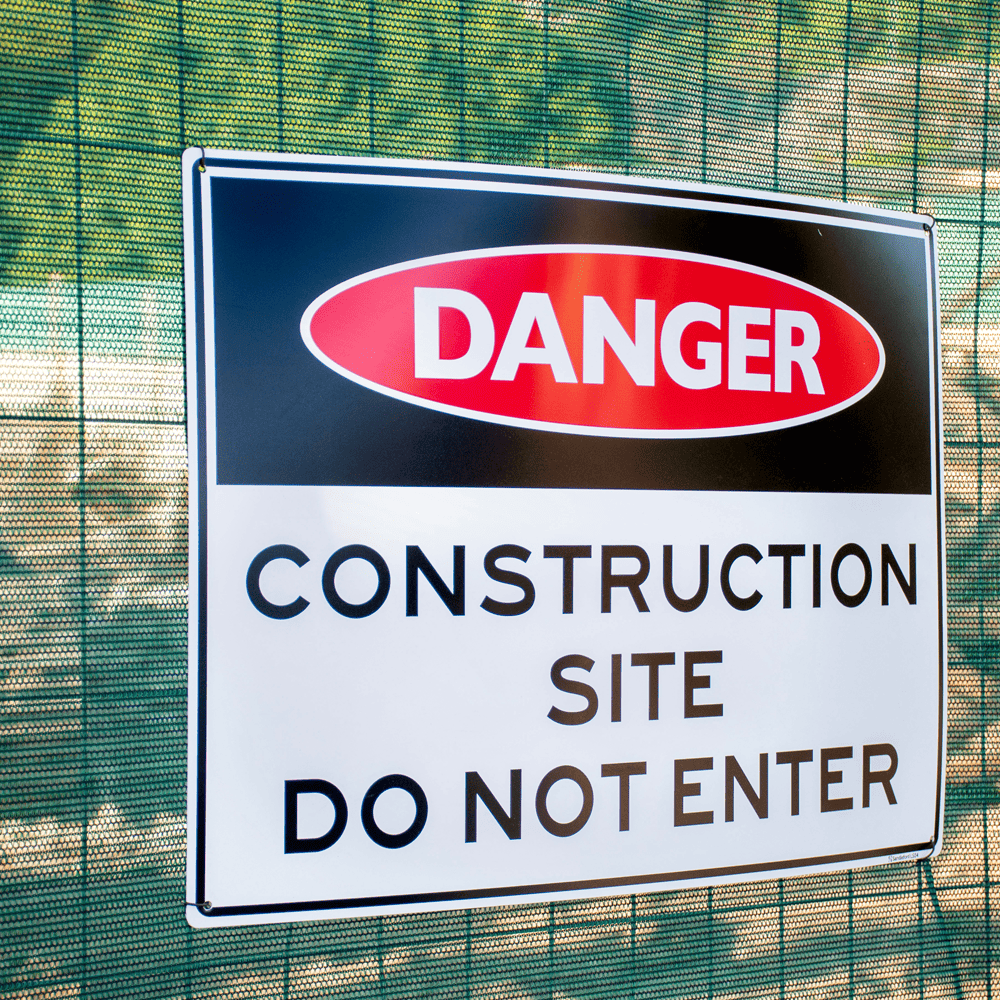
- Construction projects above a set value in most jurisdictions, where the principal contractor must display their name, after-hours number and site office location. That signage has to be clearly visible from outside the site.
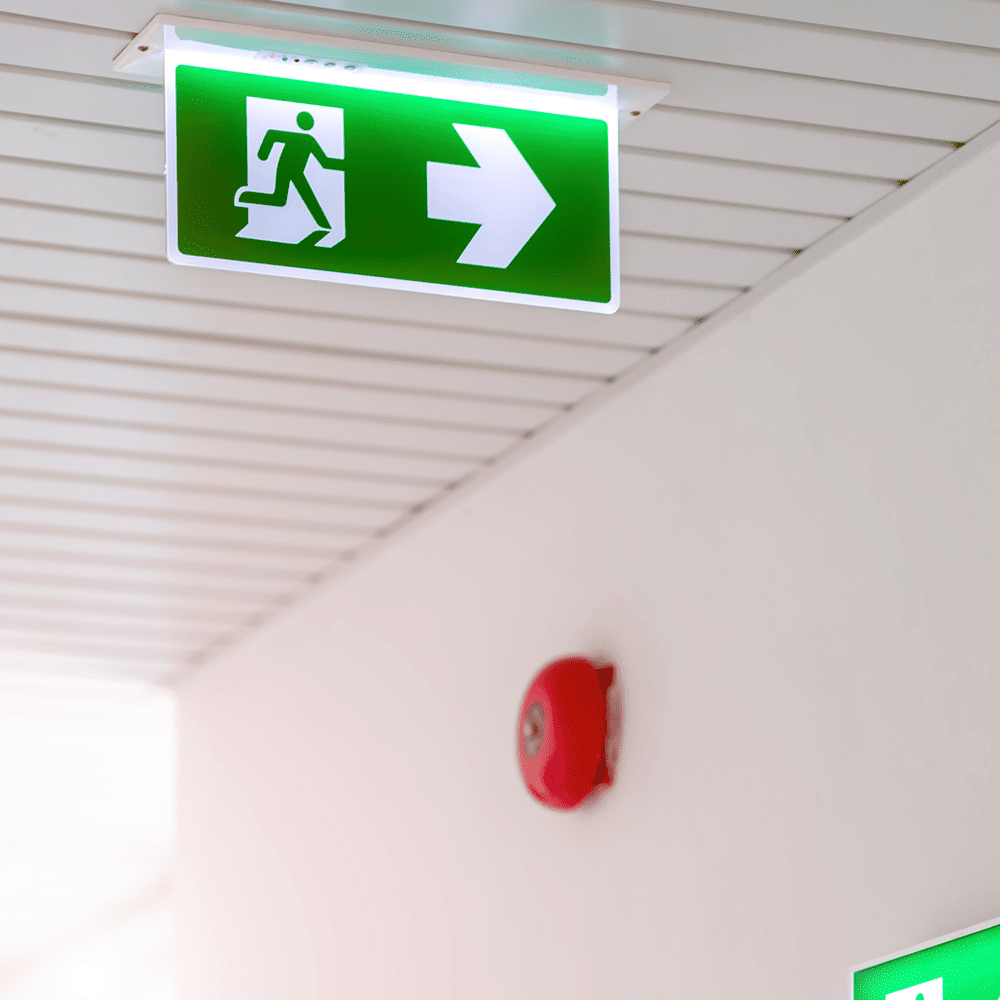
- Exit signs, which building rules require above exit doors and along escape routes wherever the next exit isn’t visible.
Asbestos is another case where the regulations require signs.
Sign design generally follows AS 1319, which sorts workplace signs into four groups: regulatory, hazard, emergency information and fire.
Why a Badly Placed Sign Can Work Against a Business
A poorly placed sign can become evidence against the business that put it up. It shows the hazard was known, and its position shows the control didn’t work as intended.
One common scenario involves a “Forklifts Operating” sign on the far side of a racking end, facing the forklift aisle. A picker steps out from the walkway side and gets clipped.
In that case, the sign establishes that the business knew about the risk. A photo taken from the walkway then shows the warning never reached the worker it was meant for.
A missing sign doesn’t improve the position. The duty also covers hazards a business ought reasonably to know about, so having no sign leaves the same gap with less to show for it.
Frequently Asked Questions
Is There a Legal Height for Mounting Safety Signs?
There’s no single mounting height that applies to every sign. Common practice puts pedestrian signs around 1.5 to 2 metres off the floor, with exit and fire equipment signs higher so they’re visible over stock. The legal test is whether workers can see the sign and act on it in time.
Can a Business Be Penalised Over Sign Placement Alone?
It can. Where a regulation ties a sign to a specific location, a missing or hidden sign can be a breach on its own. An inspector can also issue an improvement notice, and failing to comply with that notice is a separate offence carrying its own penalty.
Does Following AS 1319 Guarantee Compliance?
No. AS 1319 covers sign design, including colour, shape and grouping. The general duty then looks at whether workers at that particular site can see the sign in time.
Key Takeaways
Safety sign placement is a legal matter in Australia because the law judges signs by whether they manage risk at the point of exposure. A sign that’s present but badly positioned may count for very little. The main points are:
- The general duty to manage risk extends to where signs are positioned.
- Confined spaces carry the most specific location requirement, with signs needed at each entry.
- Chemical stores above placard thresholds need placards at the store and site entry.
- Principal contractors on qualifying construction projects need signage visible from outside the site.
- A poorly placed sign can show a business knew about a hazard without controlling it.
- Signs are a lower-order control and won’t cover for missing guarding or separation.
- Any layout change, new chemical or new machine is a cue to recheck every sign.