A traditional fireplace is rarely just a fireplace. It can mean a flue path, clearances, structural considerations, trade scheduling, and ongoing maintenance that people underestimate. Gas can simplify some of that, but it still depends on access to a gas line, routing options, and appliance placement requirements.
Bioethanol fireplaces exist because they reduce the biggest friction points. They create a real flame feature that can often be introduced with far less disruption, while still feeling like a “proper” fireplace in the room.
Real Flame, Flexible Placement
A major driver is placement freedom. People want the flame where they actually live, not where a chimney happens to be possible. Think of a living room where the best feature wall is internal, a bedroom retreat that could use warmth and ambience, or an open-plan space where a fireplace would work better as a room divider than a wall unit.
This category became popular because it lets designers and homeowners place flame as part of layout, not as a compromise around building limitations.
Common placement wins include:
- Feature walls without an existing flue path
- Some apartments where penetrations and external changes are restricted
- Renovations where structural work is being kept minimal
- Rooms that do not suit wood storage or ash management
Renovation Reality: People Want Low-Drama Upgrades
Renovations already have enough moving parts. Adding a chimney line, reinforcing structures, coordinating roof works, or running new services is often where timelines and budgets blow out. Even when it’s possible, plenty of people do not want the hassle for a feature they might use mainly on weekends or during the cooler months.
The appeal here is “high impact, low disruption.” You can improve the feel of a space without committing to a large scope of work.
When Wood Is Not Practical
Wood fires have a specific appeal, but they also bring specific responsibilities. There’s wood to source and store, ash to clean, and smoke management to consider. In many settings, wood is simply inconvenient, particularly where storage is limited or where smoke is a problem for neighbours.
Bioethanol fireplaces exist because they offer an option for people who love flame but do not want the practical baggage of wood. The fuel is stored in a container, there’s no kindling routine, and there is no ash bucket after.
When Gas Is Not Available or Not Wanted
Gas fireplaces are a great solution for many homes, but they are not universal. Some properties do not have gas connected. Some owners do not want to run a new line. Others have gas available but do not have an easy routing path to the ideal fireplace location. Some simply want a different design look than what the available gas options provide.
What this category offers is a pathway to flame when gas is not an option, or when the homeowner wants to avoid permanent service works.
Situations where this shows up:
- Homes without mains gas
- Some apartments with restrictions on new penetrations and services
- Renovations where the build is already complex
- Spaces where the fireplace is more about mood than constant heating
Design-First Living: The Fireplace as Furniture
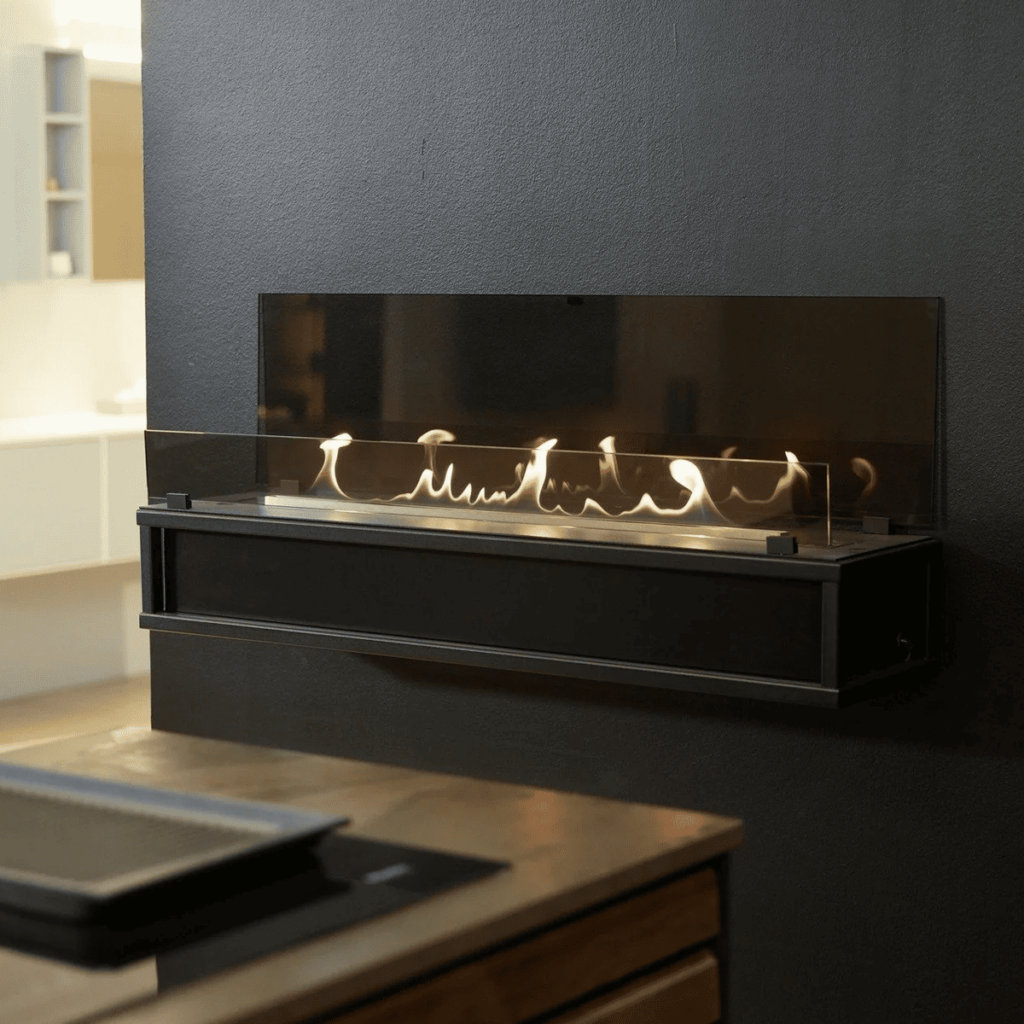
A modern fireplace is often treated like a piece of furniture or architectural detailing, not just a heater. People want a clean look, a minimal surround, or a statement piece that anchors the room. They want a flame line in a long, horizontal format, or a freestanding unit that can move with the room over time.
Bioethanol fireplaces exist because they suit contemporary design trends. You see more linear flames, simpler framing, and flexible installations that match modern interiors.
Design outcomes people chase:
- Minimalist built-in fireboxes
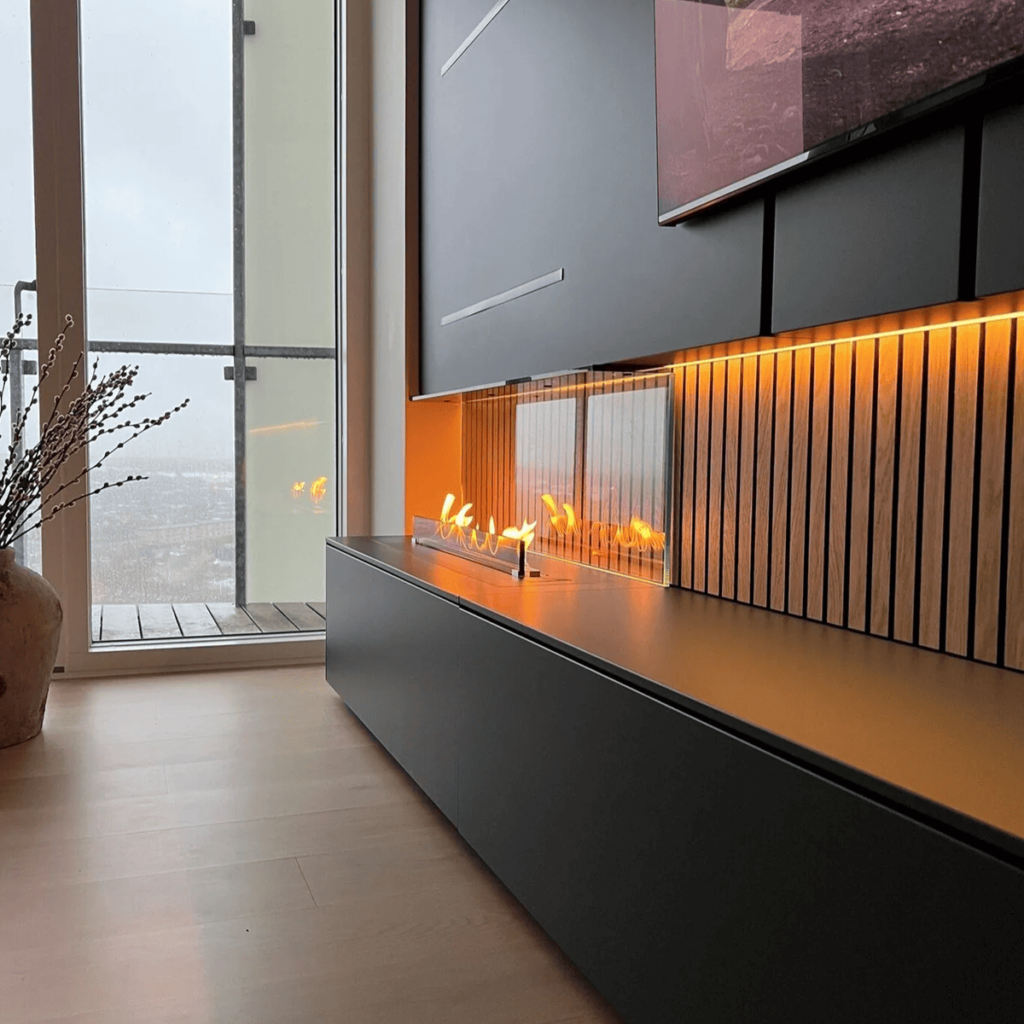
- Linear flames under a TV wall (with proper clearances)
- Room-divider fireplaces that define zones
- Freestanding pieces that can be repositioned
The “Occasional Use” Use Case
Not everyone needs a heater running every day. Many households already have reverse-cycle air conditioning, hydronic systems, or other heating solutions. What they are missing is the vibe of a flame, plus a bit of radiant warmth when everyone is gathered in one spot.
This is where bioethanol fireplaces fit well. They’re often used for evenings, entertaining, weekend lounging, or that stretch of shoulder-season weather when you want warmth without running the whole system hard.
Supplementary Warmth Without Overcommitting
A real flame creates radiant heat that feels immediate when you’re sitting nearby. For many rooms, that’s enough. People want local comfort, not a whole-house solution. They want the living area to feel cosy while the rest of the house can stay at a lower setting.
That’s why bioethanol fireplaces exist as a distinct option. They can provide a warm “zone” where people actually sit, without requiring a major installation.
Ways people commonly use them:
- Turning a cool living room into a more comfortable evening space
- Adding warmth to an open-plan area near the seating zone
- Creating a focal point that also improves comfort during entertaining
- Boosting comfort in shoulder seasons

Lifestyle Fit: Indoor, Outdoor, and Entertaining
Another reason these fireplaces exist is that they suit the way people entertain. A flame feature changes how a space feels. It pulls people together, slows the pace, and makes a room feel more intentional.
They can also work in covered outdoor areas when the space is sheltered and the unit is used exactly as the model allows. Wind can disrupt flame stability and reduce the warming effect, so outdoor use needs a calm, protected setting and a setup that is designed for it.
Key Takeaways
Bioethanol fireplaces exist because they solve a modern mismatch. People want a real flame feature, but many homes and lifestyles do not suit chimneys, wood storage, or permanent gas works. This category offers a way to add atmosphere and local warmth with far fewer installation barriers, plus a design flexibility that traditional fireplaces often cannot match.