Scheduled emergency lighting services are meant to be predictable, repeatable, and easy to track over time. Many sites book these visits to reduce surprises, keep exits usable during outages, and avoid last-minute scrambles when faults pile up. Electrical contractors in Perth often see the same pattern on sites without a steady schedule, brief tests get skipped, records drift out of date, and failures cluster when someone finally checks properly.
At a Glance: Standard Inclusions on a Scheduled Visit
Practical scheduled visits follow a consistent backbone, then adjust for site size, access constraints, and any monitoring or control setup already in place. Afterward, the site should have a clear pass/fail picture, updated records, and an agreed pathway to fix anything that did not perform as required.
- Visual inspection of fittings, exit signs, and common damage points
- Functional activation checks (switch-over when normal power drops)
- Duration testing where required (battery performance under load)
- Exit signage orientation and visibility checks along egress routes
- Register review or updates to reflect what is installed on site
- Written reporting with priorities and recommended rectifications
- Notes for follow-up repairs and any retesting required after fixes
Site Scoping and Pre-Visit Preparation
Beforehand planning is where a scheduled service succeeds or becomes a half-finished run, because access and boundaries decide what can be tested properly. Scope should define which areas are included, who controls access, and how testing will be staged around operations, especially in multi-tenant buildings or busy facilities.
- Confirm the areas included (tenancy only, common areas, whole building, car parks, back-of-house routes)
- Review the existing register, or flag gaps where a baseline register is needed
- Identify access requirements (keys, permits, EWP needs, inductions, ceiling access, stair void restrictions)
- Align timing with operations (after-hours, early morning, staged zone-by-zone)
- Check site rules for plant rooms, rooftops, loading docks, and restricted areas
On-Site Walk-Through and Visual Condition Checks
Walk-throughs catch a surprising number of faults that reduce usefulness during a real incident, particularly in stairs, corridors, and shared lobbies where fittings take knocks and signage gets blocked. Damage checks also help separate “simple parts wear” from problems caused by fit-outs, storage changes, or poor sightlines that have quietly developed since the last service.
- Confirm fittings are present, intact, and not physically compromised
- Look for cracked diffusers, missing lenses, water ingress signs, impact damage, and paint overspray
- Note obstructed exit signs, poor sightlines, and signs that no longer suit the route direction
- Identify changes since the last visit (new partitions, joinery, racking, altered door swings, reconfigured corridors)
- Flag areas where light levels look uneven, since shadowed zones often align with dim or failed fittings
Functional Activation Testing
Functional testing verifies that emergency fittings actually switch over when normal supply is interrupted, rather than simply appearing fine while the building is running normally. Trigger behaviour matters most after upgrades, because changes to lighting controls, switching, or local circuits can affect how fittings respond during faults.
Coordination with site staff helps reduce disruption, since testing can briefly impact lighting behaviour in specific zones and may require access to boards, risers, or local test points.
- Trigger emergency mode using the appropriate site method (local test switch, distribution board arrangement, or system test function)
- Confirm activation occurs promptly and reliably across the tested zone
- Check for flicker, delayed start, or partial activation that suggests component or control issues
- Identify non-triggering fittings, then record whether the issue appears local or circuit-related
- Capture outcomes by location and identifier so rectification work is not slowed by vague notes
Duration Testing and Battery Performance Checks
Following functional checks, duration testing is often where weak batteries reveal themselves, because brief illumination does not prove run time under load. Capacity loss can show up as early fade, dimming, dropout, or intermittent behaviour during discharge, and those patterns tend to cluster when fittings have aged together or share similar environmental stress.
- Run discharge tests to confirm fittings maintain usable output for the expected period
- Watch for early fade, dimming, dropout, or intermittent behaviour that indicates reduced battery capacity
- Group failures by area to highlight clusters that may suit staged bulk replacement
- Decide whether battery replacement or fitting replacement makes more sense for the site and access conditions
- Note repeated problem zones, especially where heat, moisture, or impact risk is higher
Exit Signs and Wayfinding Checks
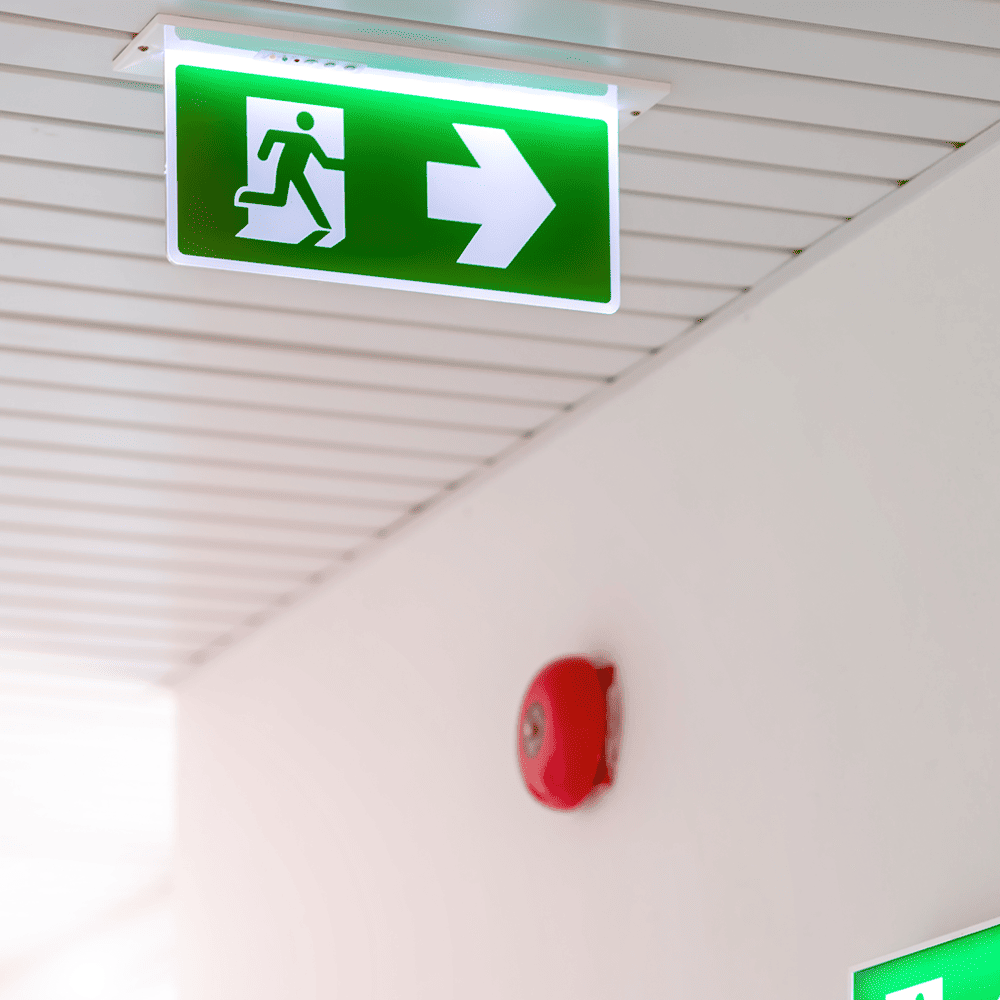
Signage checks focus on whether people can see and interpret exit information while moving, not only whether a sign lights up when viewed from one spot. Sightlines can change quickly after fit-outs, so services usually confirm orientation, arrow direction, and visibility at corridor junctions, stair entries, landings, and door approaches.
- Confirm exit signs are readable from typical approach angles along the intended route
- Check arrow direction and face orientation, especially after layout changes
- Verify visibility at junctions, stairs, landings, and door approaches where people tend to hesitate
- Identify obstructions, glare, competing signage, or placement issues that reduce effectiveness
- Consider emergency light coverage alongside signage so the route beneath the sign stays usable
Key Takeaways
Consistent scheduled servicing typically includes visual checks, activation testing, duration testing where required, signage and wayfinding checks, and reporting that updates registers and sets priorities for fixes. Reliable deliverables help site teams plan access and budgets, keep exit routes usable after layout changes, and reduce the chance of clustered failures appearing during an outage.